Monday, May 21, 2018

3 ways to say farewell to classes.


Kết quả hình ảnh cho graduation
Many of us are coming to the end of another academic year and in a few weeks the summer holidays will begin. Many students will finish another year and reach another milestone, some will graduate from school/college/university and take a bold step into the unknown. This is usually a bittersweet time for students and staff. Many students will be excited about the holidays, some students will be celebrating achieving their desired grades or better, and some will be commiserating on just missing out. Some will be excited about their life beyond school, some will be sad to say goodbye to friends and mentors, and some will be anxious about what the future may bring. Below are 5 ideas to give your current students a memorable send off.

1 Certificates and a small gift: Write an individual certificate for each student. They can be funny or they can celebrate a personal achievement and you can get students to help create these for their peers. You can accompany this with a small gift like a pen, lollipop, or flower.

2 Advice for the future: This is more of a lesson (for intermediate teens upwards), but it captures the reflective nature of the moment and turns student experience into something positive which will stay with you and your students for a long long time.

Kết quả hình ảnh cho everybody's free to wear sunscreen
  • Tell students to anonymously write down a question they would like to ask their future self.
  • Put the questions in a hat.
  • Show students pictures of the following words and get students to repeat the words: fabulous, blindside, jealous, meandering, congratulate, berate, guilty, inalieable.
  • Get students to match the following synonyms to the words: beautiful, surprise, insecure, explore, celebrate, be annoyed, to blame, natural.
  • Tell students to watch Baz Luhrmann's 'Everybodies free to wear sunscreen' and write down as many pieces of advice for life as they can.
  • Tell students to check with their partner and share the different pieces they heard.
  • Ask students follow up questions about the advice: It it good advice? do you agree/disagree? Why?
  • Put the questions students asked at the beginning on the wall.
  •  Give students pieces of paper and ask students to work in pairs and look at the question. Students should write one piece of advice for each and place it under the question.
  • Take a photo and share it digitally with the students.

3 Class appreciation poem: This is another lesson but it can be used with lower level students from the end of elementary upwards.

  • Ask students what makes them happy? what they are good at? what subject they found hard? Ask students how they felt they did on the exam?
  •  Tell students they are going to read a poem and they should write down what exams don't do and see.
Exams don't measure sports,
Exams don't measure art,
Exams don't measure music,
or the goodness of your heart.

Exams don't see your beauty,
Exams don't see your worth,
Exams don't know the reasons
You were put on this earth.

Exams don't see your magic,
How you make others smile,
Exams don't time how quickly
You can run a mile.

Exams don't hear your laughter,
Or see you've come this far,
Exams are just a tiny glimpse
Of who you really are.

Remember you're the best!
  • Give students the name of a fellow student in the class and ask them to write one line about what that person is good at, or write a one line positive memory of that person. Try to think who knows who. :)
  • Collect the lines, mix them up and rearrange them into a poem. Play some dramatic instrumental music and read them out as a poem. 
  • Type up the poem, print it out, and give each student a copy.

Saturday, May 19, 2018

An interesting critique of ELTs obsession with fun!

Fun is great, and no one wants to be in a boring class, no one would argue with that.That being said is it the be all and end all? And Is it really what students want? Comapnies may think so, but this article makes some very interesting points.

Read this article

Wednesday, May 16, 2018

What autism can feel like

In recent years the study of autism has evolved. In the early 20th century it was classed as childhood schizophrenia, but later it developed into a condition, and finally into a spectrum of conditions (although this isn't as certain as it used to be). I rememeber taking a course called understanding autism with The University of Kent. The researchers, professors, and those with autism talked about how soon the conditions we may call autism may soon be separate diagnoses, but this is not certain.

In my previous post I gave you a task to understand how Dyslexia and related conditions often feel. This is another post hoping to help those who teach neuro-diverse students to better understand and empathize with their students. Below is a video by the National Autistic Society about how autism feels from a child's perspective.

While you watch I would like you to try and answer the following questions.
What did you notice about the noise?
What do you think the child felt when he touched other things?
What emotions did he feel?
What do you think made him feel this way?

* Please note that because of the vast variation this will certainly not cover the varied experience of all autistic people but will give you an overview of how many may feel!


For further information I recommend this fantastic free online course that runs from time to time.

Understanding Autism - University of Kent
https://www.futurelearn.com/courses/autism

Tuesday, May 15, 2018

What do dyslexia and related conditions feel like?

At certain points in your career you will come across neurodiverse students. It can often be hard to know how to help, or what to do for many reasons including unfamiliarity. Below, I will give you a task that will allow you to walk in the shoes of students who struggle because they are dyslexic and have other related issues.

Task

Instructions
Set a timer to 3 minutes.
Pick up some paper and a pen or pencil.
If the paper is lined turn it horizontal.
If the paper is not lined turn it portrait.
Pick up the pen or pencil with the hand you don't normally write with.


You are going to see a short text and you have 3 minutes to copy it down.
Whenever you see an 'e' write a cross '+'.
Whenever you see an 'a' write a question mark '?'.
Whenever you see an 'i' write an '=' sign.

Ready? Start the timer and begin.

PLEASE COPY THIS:

Some people are light or colour sensitive. Bright sunlight or florescent lights may bother them. Black print on shiny white paper may be uncomfortable and whiteboards may be too shiny. Pattern glare may also be a problem. It may be helpful to have:


coloured paper for writing,

coloured overlays for reading,
tinted lenses in glasses for both reading and writing.

The colours and brightness on computer screens can also be adjusted to suit individual needs.


Task finished.


How did you do? How did you feel? Was it easy or difficult? What specifically did you find challenging? The problems and frustration are common for students with dyslexia. Reading is the most common problem, but writing, memory, and coordination can all present through dyslexia and related conditions.


Multi-sensory education: and its applications in special needs, beginners, and young learners

Often in classes we can over rely on sight and sound. Of course, these are the principal ways most of us interactive with the world but at the same time we shouldn't underestimate the power of learning as an experience. In recent years a new pedagogical approach, 'The multi-sensory approach' has been gaining traction, it comes from teachers who work with beginners, young learners, and special needs students who are often frustrated with the lack of options to help their students which work in today's contexts.
Image result for multisensory
The idea is that through hands on, authentic, and experience as learning these students can make much bigger advancements than before. This approach and my training in this area has helped me immensely. Over 1 year ago, I embarked on a journey to help special needs students and to better understand how to teach really low level young learners. In the end my practice led-research in both areas took me down the same route. Over the next few weeks I will be sharing what has worked for me and explaining more about this radical new approach.

For now let me leave you with a few resources I have come across that can tell you more and help you develop.

Dyslexia and Foreign Language teaching - Lancaster University
https://www.futurelearn.com/courses/dyslexia

Multi-sensory Instruction
https://www.understood.org/en/school-learning/partnering-with-childs-school/instructional-strategies/multisensory-instruction-what-you-need-to-know

Multi-sensory reading activities
https://www.understood.org/en/school-learning/partnering-with-childs-school/instructional-strategies/8-multisensory-techniques-for-teaching-reading

Multi sensory approaches in the Elementary school: summary of reference papers
https://files.eric.ed.gov/fulltext/ED432388.pdf

Monday, May 7, 2018

Autism: a different perspective!

Too often the Neurodiverse are written off by education systems and autistic people know this more than most. Too often we focus on what they can't do, or struggle to do and accept it without questioning or analyzing it. Rarely do we talk about their strengths, their unique insights, or even their skills. Recently I found this great infographic by the University of Leeds which can be a useful guide on what autistic people do well and how we can use these in class

.


Saturday, April 21, 2018

Earth day project: Geography + Design


Below is a geography lesson on the environment for earth day!

Age: 9+

Vocabulary: pollution, environment, recycling, deforestation, global warming, carbon footprint

Level: pre-intermediate+

Image result for earth day

Lead in: Show students this video and ask:What if the earth treated us the way we treat earth?

Vocabulary: Ask students what problems there are with the environment, try to elicit the vocabulary.

Give students a list of all the vocabulary and ask them to work in teams. The fastest team to label all the pictures around the room correctly wins.

Google hunt: Ask students to find out more about these problems using their devices. Give students the following questions. The best answer wins 5 points
Image result for ?
Use the following questions 1 by 1
What is global warming?
What causes global warming?
Find 3 facts about deforestation?
How can recycling help protect the environment?
What does air pollution do?
What is a carbon footprint?
How can we reduce our carbon footprint?


Driving problem: Ask students to choose an environmental problem in their country.

Students will work in groups to create designs and models for an exhibition.

Students must find facts about the problem and detail it on posters and handouts.

Students must design an invention to tackle this problem.

Students must create a model of their invention.

Students must answer questions about their problem and explain.


Notes:
If you have the time and the resources you can make the invention.

Students should spend:
one more class researching
one class making information
one class making
one class presenting.
If you have more time you can add accordingly.

Assessment is on the use of the vocabulary, presentation of concepts, research, creativity and critical thinking.


Friday, April 20, 2018

ESL lessons using HONY (Humans of New York).


In the last couple of years an amazing blog called HONY (Humans of New York) took the internet by storm. The blog (http://www.humansofnewyork.com/) documents the real life stories of the diverse and beautiful people of New York. Some of the stories will make you cry, some will make you laugh, others will inspire, and some will take you on an adventure. Young and old we all love stories, and stories are a fantastic way to learn and connect with students. These lessons focus on reading, and use it to teach grammar, receptive skills, and provide authentic communication practice.


Below are 5 lessons you can use.


1 Reported speech

Level: Intermediate

Story: Boy vs mafia
https://78.media.tumblr.com/7b9872076bb05bd8fa905556e03fb99d/tumblr_nbqpufTxJC1qggwnvo1_1280.jpg

Materials: the link above, word cloud generator (https://www.wordclouds.com/)

 Pre-class: Put an assortment of text into the word cloud generator and show this on the board.


1 Lead in: Show the word cloud on the board and tell students they are going to read a story and they should predict what they will read about.

2 Gist reading: Ask students to read the story for 1 minute and say what it is about.
-Let students talk to their partner after reading for 30 seconds before calling on them to share with the class.

3 Scan reading: Students should now read again and answer the following questions:
-Why did Uptal scream?
-What did the newspaper say?
-What happened to the criminal?

4 Grammar: Now get students to walk around the room in pairs and look at the quotes from the article and other sentences translated between direct and reported speech. Ask students to think about what has changed in each sentence.

Now put students into new groups of 3 and get them to tell their new group.

Next Elicit the changes and write them on the board e.g.
present simple - past simple
past simple - past perfect simple
present continuous - past continuous
present perfect - past perfect
will - would
can - could

Explain that we use reported speech in writing to say what happened.

Now draw a circle on the floor or board and get students to write down all the reporting verbs they can find in the article and any others that they can think of.

5 Communication: Get students to work in pairs and give them either letter A or B. Student A should describe an something that they achieved and talk about how their family reacted. Student B should ask follow up questions and listen and write down what their partner said and what happened in reported speech.

Then get students to change roles.


2 past tense review

Level: upper-intermediate

Story: I was studying literature and french when.../part 2part 3

Materials: the link above


1 Lead in: conversation - ask students past tense questions about a memory? Then ask follow up questions using the past perfect.

https://78.media.tumblr.com/78e36a9658ff3ae204e89a3f1815774b/tumblr_nysqs5PGvw1qggwnvo1_1280.jpg2 storybuilder: Write the title on the board and elicit the next clause from students. Students keep building this story.
3 Gist reading: Students read and say what the story is about?

4 Reading for prediction: Students try to predict the next part of the reading.

5 Scanning: Students read again and answer the following questions.

what happened to his house?

Was his house destroyed before or after his mum told him?

How did he meet his wife?

how often was he calling her?

Did he call her once?

Where would she sit and wait?

Did she sit and wait once or many times?

6 Reading for detail: Students read the final part of the story and take notes. They will retell the story later.

7 Communication: Students retell the story in groups.


3 first conditional

Level: Preintermediate

Story: A piece of advice

Materials: The story above, questions and facts about the first conditional.


Pre-class: Set up information about the first conditional around the room and prepare questions.


1 Lead in: Students are presented with a series of scenarios. If you have 1million usd, you will?, If you speak English, you will... Students discuss with their partner.

2 Grammar: Students complete a jigsaw with facts and questions about the first conditional.
https://78.media.tumblr.com/283b6f007a10741eb1585f6fc85f9f78/tumblr_nbt345vpSX1qggwnvo1_1280.jpg
3 Reading: What does the author mean?


4 Communication: Students discuss: Whats the best piece of advice you could give yourself, your family, your friends, your teacher, your community, your country, the world?


4 Vocabulary to describe peoples appearance

https://78.media.tumblr.com/5d3c69debaa09a7a952aedf75e5cd069/tumblr_nazls9GmNn1qggwnvo1_1280.jpgLevel: Elementary

Materials: pictures from different countries, A3 paper, markers, tablets, HONY. 

Vocabulary: Fabulous, quirky, curly, straight, moustache, beard, dark skin, light skin, handsome, colourful


1 Lead in: Ask students to draw the outline of a person on a piece of paper. Inside they should write adjectives about their personality, and outside adjectives about appearance.

2 Teach vocabulary: Give students some new vocabulary by showing corresponding pictures.

https://78.media.tumblr.com/87f58bb10907c9ab161924d672d553de/tumblr_nblljmON4U1qggwnvo1_1280.jpg3 Prediction: Ask students to look at the pictures and write around the picture adjectives about that person.

4 Read and check: In pairs students use their tablets and find and read a story about one of the people. They then see if anything surprised them, and compare how they would describe the person now.

5 Communication: Students describe a celebrity to their partner and their partner listens and draws. Their partner can ask questions and must try to guess the name of the celebrity.


5 Mini project - After using these lesson plans you could get students to make their own HONY page for their hometown or city. Students can interview family, friends, community figures, or even strangers (within reason) and so on. This can then be used for a blog project.

Students can be assessed on the use of certain language points, digital literacy, creativity, team work, and communication.


Saturday, April 14, 2018

3 recent IELTS Writing task 2 questions

IELTS Writing Task 2/ IELTS Essay:

You should spend about 40 minutes on this task.

Present a written argument to an educated reader with no specialist knowledge of the

following topic:

The 21st century has begun. What changes do you think this new century

will bring?

Use examples and details in your answer.


You should write at least 250 words.


IELTS Writing Task 2/ IELTS Essay:

You should spend about 40 minutes on this task

It is said that "Not everything that is learned is contained in books".


Compare and contrast knowledge gained from experience with knowledge gained from books. 
In your opinion, which source is more important? Why?

Give reasons for your answer and include any relevant examples from your own 
knowledge or experience.


Write at least 250 words


IELTS Writing Task 2/ IELTS Essay:

You should spend about 40 minutes on this task.

A company has announced that it wishes to build a large factory 

near your locality.


Discuss the advantages and disadvantages of this new influence on your community.

Do you support or oppose the factory establishment?

Explain your position.

Write at least 250 words.

3 recent IELTS Academic Writing task 1 samples

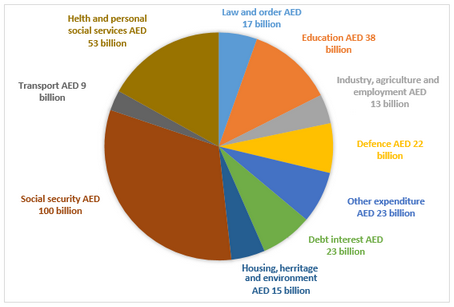
The chart below shows how much money is spent in the budget on different sectors by the UAE government in 2000.

Summarize the information by selecting and reporting the main features, and make comparisons where relevant.

 money is spent in the budget by the UAE


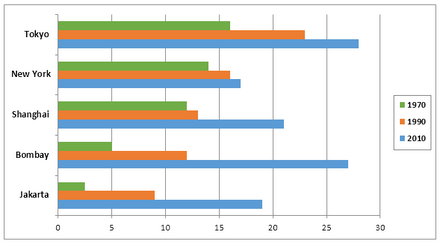
The charts below show the growth in the population in some of the world’s largest cities as well as the population distribution in urban and rural areas.

Summarize the information by selecting and reporting the main features, and make comparisons where relevant.

Growth in the population in largest cities


The average prices per kilometre of clothing imported into the European Union from six different countries in 1993 and 2003 are shown in the bar chart below.

Summarize the information by selecting and reporting the main features, and make comparisons where relevant.

Prices of clothing imported into the European Union  

5 recent IELTS Speaking part 2 topic cards


Describe a book that had a major influence on you.

You should say:
  • what the name of the book is & who the author is
  • how you first heard of the book
  • what the main story of the book is
and explain why it played such an important role in your life.

Describe a historical place that you know about.

You should say:
  • what the place is
  • where it is located
  • what is the historical significance of the place
and describe your experience of the place.

Describe an old person you admire.

You should say:
  • who this person is
  • how long you have known him/ her
  • what qualities he/ she has
and say why you admire him/ her.


Describe a positive change in your life.

You should say:
  • what  the change was about
  • when it happened 
  • describe details of the change happened 
and describe how it affected your later life


Describe an important invention that you think has positively influenced the human race.

You should say:
  • What the invention is
  • Who invented it
  • What changes it brought
and explain how it has positively influenced the human race.


Friday, March 30, 2018

Understanding neurodiversity in education (dyspraxia, dyslexia, dyscalculia, dysgraphia)

The world has come a long way since I was diagnosed with Dyspraxia as a child 20 years ago. Of course there is a long way to go, but as someone who grew up in a small working class town going through a somewhat broken education system the changes in awareness give me hope. When I was growing up family and teachers had the best intentions (for the most part) but too often I was met with caring types who wanted to help but didn't know how, other types who could only offer well meaning pity, some types who had a complete disregard for me (and science too apparently), and of course those types who never gave up and walked with me in the dark as I overcame the obstacles I faced. Today dyspraxia and other similar conditions are seen as common and hardly life changing, but when I grew up people certainly made a song and dance and jumped to wild conclusions. which often made me feel a burden, stupid, useless, inferior, or alienated.

These days as a teacher I look at things from the other perspective. Too often the knowledge is there but not everyone is applying it. In schools in the UK (my home country) I hear concerning stories of students of all neurodiversities being sidelined. Teachers tell me about cuts to SEN budgets resulting in a lack of resources and support staff, teachers not being trained and being so overworked they just don't have the time, and assessment systems that have a nostalgia for the mid-20th century. I hear about children with educational needs being left in the corner or sent to isolation.  The international education sector isn't doing too great either. Don't get me wrong, I love the international education sector and think that it is truly innovative in many ways: 21st century learning is a great example of this yet when it comes to special needs and support it is lacking. I have worked in three countries for mostly good schools and yet none have had a clue about what these conditions mean, how they manifest, or what to do about them. Every so often a teacher in the staff room will share concerns about a child with such conditions or I will teach a child with a learning difficulty, yet when it comes to finding support in management or resources there is nothing.


A few months ago i'd had enough of this situation and with the support of my boss I said something has to change! I observed one of my students with dyslexia, researched online, tried things out, got involved with my local orphanage teaching special needs children of all kinds, went onto Futurelearn and took a few courses: Incusive Education (University of Cape Town), understanding autism (University of Kent). I then used what I had learnt and created a workshop for my school. You can find this in previous posts (November 2017) on this blog along with an open source document I composed which has practical ideas, information, and links. I urge people to use this, and to freely update the version on there with any information they find or fee would benefit teachers.

I will take another course next month with Futurelearn on Dyslexia and foreign language teaching (click here to join for free) and add to my this but for now check out the interesting infographics on this post by the people at 'We are teachers'. They explain more detail about dyspraxia, dyslexia, dyscalculia, and dysgraphia.

Sunday, March 25, 2018

A fantastic resource for professional development

In my professional development, I have come across this fantastic book. It's completely free and inside it contains essays by pioneers and researchers in ELT. They talk about taking literacy beyond reading and writing (visual, pragmatic, kinesthetic, contextual) and provide fantastic lesson ideas to build HOTS (higher order thinking skills), literacies, engagement with learning, and a classroom that is relevant in the 21st century. There are many brilliant ideas and resources with a strong rationale and explanation behind them.

Ideas include:
Gamified learning
Project Based Learning
Interdisciplinary Learning
CLIL
Poetry
Graphic novels
Films
Art
Installations
using classrooms a.d space effectively.

Click here to read

Friday, March 23, 2018

Professional development opportunities - Futurelearn

I have plugged this website before. Futurelearn is a fantastic platform for professional development. It was founded by The Open University in the UK as a way to bring 21st century learning to life. It runs fantastic courses, and programmes by Universities across the world and organizations like British Council. You can take these courses for free (upgrade is possible for a small fee), and learn about many subject areas in depth. Courses use quizzes, video lectures, discussions, articles, tasks, and projects to help you gain skills. I really cannot recommend it enough!

In the teaching section there are some insightful courses coming up.

Understanding Autism by the University of Kent: I have taken this course before and I thoroughly recommend it. It has brilliant lecturers, great resources and you learn a lot in a short amount of time. It can really help you to understand the learner psychology of autistic students. It helped me to develop effective strategies, remove obstacles for learning, and help students engage with learning.

Dyslexia and foreign language teaching by Lancaster University: This course will again look at another common issue for learners. Learners with dyslexia often find language acquisition challenging and too often they can be written off or hindered by teachers who either mean well but don't understand or teachers who give up. This course will help teachers to understand dyslexic learners, and explore how we can overcome this challenge. As a dyslexic who speaks 3 languages I can assure you there are ways ;)

Teaching for success: teachers and teaching, learners and learning by British Council: These are 2 courses. I recently completed the first and found it contained some useful activities although I would say this is aimed more at newer teachers. I will undertake the second as I am sure it has lots of great activities, insights, and strategies to better help learners.

Managing behaviour for learning by National STEM institute: This course was amazing. Even if you don't teach STEM classes the learning is very transferable. It uses fantastic scenarios, the ins and outs of learner psychology, tricks and tips, and many research and practice opportunities.

For more information see this link: Futurelearn teaching courses

Thursday, March 22, 2018

Teaching Primary: a story idea

Kids love stories! Any parent or teacher will tell you that a good story can keep children quiet and engaged. The messages of the stories, and the information they contain carries through the years even if the nuance of character and narrative don't.

To do this all you need is a soft toy, some free time, and a camera.

Think of a story for the content. If you're teaching ESL maybe the target vocabulary, If you're teaching history maybe some events, if you're teaching geography some places. Find the items, a place with information, or even print some A3 pictures with a background.

Take some photos with the soft toy and the above (5-10 different photos should be enough). Form some kind of narrative. If you're not a natural storyteller use these prompts.

  • One day/Just the other day/once upon a time (name of soft toy) went to...
  • he/she was excited/hungry/scared/happy... (introduce any other characters and provide some information about the situation)
  • When he/she arrived, they did/saw/ate/played... (you can use a few things and pictures for this)
  • but then (something happened: insert a problem)
  • Suddenly (something that helps overcome the problem happens).
  • Finally (what happens at the end)
To introduce the class topic, you can put the pictures on a google slides presentation and change slides at each scene, or you can print the pictures out and put them on the board like a storyboard. 

If you want to use it as a listening task you can cut the pictures out individually and get students to rearrange. Additionally if you want to get students speaking you can get them to make a story with the pictures.

Alternatively you can use the camera, soft toy, and the other materials for a storytelling project where students go out and make a story.

Meet Hugo


Hugo likes adventures.


Tuesday, March 20, 2018

No more PARSNIPs

Look in any ESL textbook and I guarantee you won't find any current affairs, religion, or history. Why? Because of an acronym called PARSNIPs which stands for politics, alcohol, religion, sex, narcotics, isms, and pork. The acronym was created by well meaning people who wanted to avoid controversy in the classroom for legal, moral, and/or personal reasons.

Although the rationale makes sense, topics such as religion, politics, and isms allow us to understand our complicated world. Likewise being able to use the technical vocabulary for those topics is a sign of a high level. On another note I would like to address how using those topics correctly can open many doors to developing HOTS (Higher Order Thinking Skills). These skills and these topics are important to create students who are also 21st century citizens. Many people don't feel comfortable talking about issues due to taboos or fears of looking stupid, or even being verbally abused. Others take a different tone! Log onto social media, look at any news article, or any discussion and you will see entrenched people from across the political spectrum yelling at each other, hurling baseless insults, carrying out character assassinations, and refusing to compromise, listen, or question themselves and others. Open any  newspaper and read comfortable opinions doing the same with an intellectual disguise. Watch a politician and there's some catchy soundbites but not much else. We live in a world with conflict, and disagreement yet too few are addressing the big issues and questions respectfully. This cant go on, too many people across the world, across faiths, and across the political spectrum feel no one is listening, there is so much apathy and anger. We need to create global citizens who although they may never agree with each other will be able to address the issues and make an impact. You don't have to be a liberal, you don't have to be a conservative, you don't have to be a Christian, you don't have to be a Muslim, you don't have to be one thing or another. You just need to be able to question yourself and the world around you, to find the evidence to support your beliefs, respect others who vehemently disagree with you, and most importantly you have to know how to make a difference without a negative impact.


Now on the other hand, I will say this, opposing the rule isn't an excuse to force your opinion  on the class or indoctrinate students into a religion, or ideology. We have to be careful that our own biases don't hijack the discussions. We should always play devils advocate with our students and ourselves, we should set up class contracts which emphasize respect for adverse opinions and beliefs, and respect for questioning and investigating. An opinion is only wrong when there is no evidence to back it up, or is used to bully, harm or harass an individual for any and all characteristics including: Sex, Gender, Race, Culture, Religion, Disability, Sexuality, and Disability. All classrooms should be safe, but all ideas and ways of life including those above should be questioned. There are no two people with identical views even those who share an ideological belief. We should acknowledge this and encourage our classes to be a place for reflection on ourselves and our ideas, for questioning ideas, for active listening and respectful engagement.and being curious.

Whatever is the case we need more debate, and discovery in our classrooms using opposing viewpoints on the topics which define the world we live in.

Food tech - CLIL mini course

Level: Elementary+

Age: Grade 6 - 8

Materials: A3 paper, makers, crayons, pencils, oven, cooker, food prep stations, chopping boards, rolling pins, computer with word processor, work place signs with rules, messy kitchen picture, post it notes, dough, cheese, tomato, mushrooms, sausage, onion, other food items

By the end of this course students will have learned: modals of obligation, cooking verbs, cooking vocabulary, and how to describe tastes and textures. Students will have practiced cooking skills, presentation skills, critiquing, and designing.

The course will use authentic task based learning.


Lesson 1 - Hygeine

Language: Modals of obligation

Skills: Presentation, speaking

1 Students look at signs and match them with the rules.

2 Drill pronunciation.

3 Mini board writing race - show the signs and get students to write the rule. the fastest team wins points.

4 Students are asked what are the rules at home. Pass the ball to each student to find out.

5 Show the picture of the messy kitchen and ask what's wrong? Students discuss for 2 minutes and then share with the class.

6 Get students to brainstorm some rules that will help in that kitchen.

7 Get students to make a poster with kitchen rules.


Lesson 2

Language: Modals of obligation review, cooking verbs, recipe, ingredients

Skills: Listening, Speaking

1 Give students post it notes and get them to write down as many rules and stick them on the relevant parts of the kitchen. Check that they did it correctly, and check for mistakes.

2 Ask students if they like Pizza. Tell them today you are going to make pizza and elicit what is on the pizza.

3 Give students a sheet with ingredients, and cooking utensils for the pizza written on it but no steps for the recipe. Get students to predict what happens next.

4 The teacher makes a pizza describing each step, students listen and write.

5 Check answers.

6 Share the pizza or pizzas depending on the number of students. Tell students they are going to talk to their partner about their favourite food. Students should talk about what food they like, what ingredients it has, and how its made.

7 Students share with the class.

8 Tell students to write the recipe, and other information down with their partner.

9 Check for mistakes.


Lesson 3

Language: Review, and amounts

Skills: Listening, speaking, design

1 Students have pictures of amounts and the words, they must match these.

2 Get students to add this information to their ingredients

3 Students use their computers to type up their recipes and find pictures.

4 Students print them out and you make them into a class recipe book.

5 Tell students to choose their favourite recipe.


Lesson 4

Before class: bring the ingredients to class for the students favourite recipe.

Language: Review, tastes and textures

Skills: Listening, speaking, cooking

1 Get students to label the utensils and foods. Check for errors

2 Give students the recipe but with blank spaces, get them to fill in the blanks. Check

3 Show students pictures of foods with different tastes and textures. Teach them the vocabulary.

4 Get students to volunteer to be blindfolded. get them to and taste foods. Students describe the texture and taste.

5 Let students make the recipe with your guidance (or lower maturity and level groups it may still be beneficial to do it stage by stage with students copying).

6 Competition time - Students go around the room with a check sheet and say whether it's good or bad. Students should think about texture, taste, amount, and presentation. The student or pair with the highest point wins.

Homework - Get students to write a review.

Friday, February 23, 2018

33 Ideas for the low tech classroom


You have taken a job at an NGO in a developing country, and you're so excited to be making a difference. Before class your mind wonders about who your students might be, how you can help them, and the lesson you've planned. You enter the classroom and staring at you is a large class with dozens of faces curiously observing you. You quickly realize that the level is mixed, some students can happily chatter away about a range of topics, others can't say their name correctly. The ages are mixed too, roughly between the ages of 9 and 14. You quickly realize all that you learnt from the safety of your CELTA hasn't prepared you, nor has any prior experience in language centres. You want to help these kids and open doors but you face a huge challenge, which has thrown you in the deep end.

In much of the world English is not learned in state of the art language centres or nice comfortable private schools. It is learned in contexts like public schools, charities, or private business classes. It is learned in rooms with chalk, a board, a dated book, and some tables. Technology is scarce or non-existant and class sizes are large. This presents challenges for speaking, listening, error correction, classroom management, and individualized learning. Having worked extensively in public schools and for NGOS, I am all too familiar with the challenges. Too often students have to follow the audio lingual method, put up, don't have teachers with a decent level of English, or are forgotten about because money is short. Learning can still be personalized, interesting, and profound and I hope the 33 ideas below will help those of you in this situation.

Classroom Management

Castles - Put students into teams of between 6 and 10 students. Each team gets a castle, if they behave well and answer questions well they can build their own castle piece by piece or destroy the other teams castles piece by piece.

Image result for draw castles on the boardRules - At the start of the course elicit rules like: Speak English, Listen, Be nice... Make a poster later with these and put it next to the board every class (Keep the rules positive rather than negative).

Warmers + Fillers

Stop the Bus - Write 5 categories on the board and give students a letter. On a piece of paper they must think of a word with that letter for each category. You can also do this with phonemes without letters to practice pronunciation.

Bang Bang - Write 7 - 12 words on the board and get some students to come to the front. Say the words.

Mystery box - Get a few boxes (you can decorate them to make them more exciting) and put inside things students can smell or touch. Use this to introduce topics.

Riddles + Jokes - These can be written on the board and students can try to decipher them.


Vocabulary

Board race - Give one piece of chalk to each team and write on the board a vocabulary topic. Students run, write a word, then run back and change person. (This is great for both eliciting and reviewing).

Hangman - Everyone knows hangman. You can get students to run this activity sometimes too ;)

Noughts and crosses - Draw a grid and write a word in each square. Students work in two teams and guess the letters. When they guess the word, they get to put their nought or cross in that box.

Pictionary - Draw something and students guess. Students can also run this activity.


Grammar

Ball toss - Get students to make a sentence by passing the ball. Students then say a word or clause and the next student with the ball says the next word or clause.

Slap the board - Write down a few grammatical terms on the board e.g. tenses past, present, future, perfect. Give a fly swatter to one person in each team. You say a sentence with that grammar point and students hit the correct category. the fastest wins points, and students change.

Funny phrase challenge - Students work in pairs with paper and a pen and you get them to complete a sentence with the funniest answer. The students with the funniest answer wins that round. For example for passives you may write 'by Justin Bieber' and students have to write a silly sentence ending with this.

Pronunciation

Tongue twisters - Write down one or two tongue twisters with the phonemes you are practicing. Practice together first then team by team. Finally make it a competition where the team that says it the fastest wins. Time each team separately and make sure they do it properly.
Image result for tongue twisters
Stop the Bus - See above

Shouting dictation - Students make 2 lines at opposite ends of the classroom and take it in turns to shout information. The other side writes down what they hear. This is also great for listening and speaking.

Listening

Listen and draw - Describe a scene and students draw it alone. This can be used with any vocabulary and is great for prepositions of place. You can also get students to do this in pairs to practice speaking and personalize learning. All your students need is imagination.

Bingo - Give students a grid and get students to complete a grid with the vocabulary and they learned. You then say sentences and they have to listen and cross the words when they hear them.

Dictagloss - You speak and students write down what they hear. You can also scaffold this and get them to just listen for key words, or give them a word class in groups e.g. person 1 verb, person 2 noun, Person 3 adjective. Students then listen and write and finally reconstruct what they heard. This is great for stories.

Shouting dictation - see above


Reading

Corners - Put information around the room about the topic. Students work in pairs, one person runs and one writes. After each go they change. You can set tasks like find 5 facts or answer the true and false questions.

Jigsaw - Students have scrambled up pieces of paper and have to reconstruct the reading. You can then ask follow up questions.


Speaking

Questions on the board - Fairly self explanatory.

Dialogue -  Students write a dialogue on the topic.


Writing

Circle writing - Students start a story on their paper and after 2 minutes (time can be adjusted), they pass it along.

Postcard - Students have to write a postcard for travel, what they have learned or about what they did. You can turn this into a project see below.

Image result for postcardsRecipe - Great for modifiers, quantifiers, cooking verbs, and food. You can turn this into a project see below.


Dialogue - see above

Haiku - Students have to write a Haiku about a topic.


Projects

Exchange - Students can write  postcards to a class in another country. You can do this every few classes and hopefully build international friendships.

Recipe book - Students create a recipe book for the whole class. Photocopy it and give everyone a copy.

Magazine - Give students a topic and different approaches. Encourage them to make a magazine that can be photocopied.

Novel - Students work in pairs or groups to write chapters of a few pages each. Combine this and photocopy.

Poster and art gallery - Students make a poster about a topic and present on the board. Students then go and look around.

Book of poetry - Get students to write haikus and make it into a book.

Expo - Get some boxes, tubes, tinfoil and get students to make an invention. Do an expo at the end where other classes come and ask students questions.

Crafts - Get some paper plates, straws, scissors, and a stapler. Make animal masks, sundials, monsters, and anything else you can imagine.